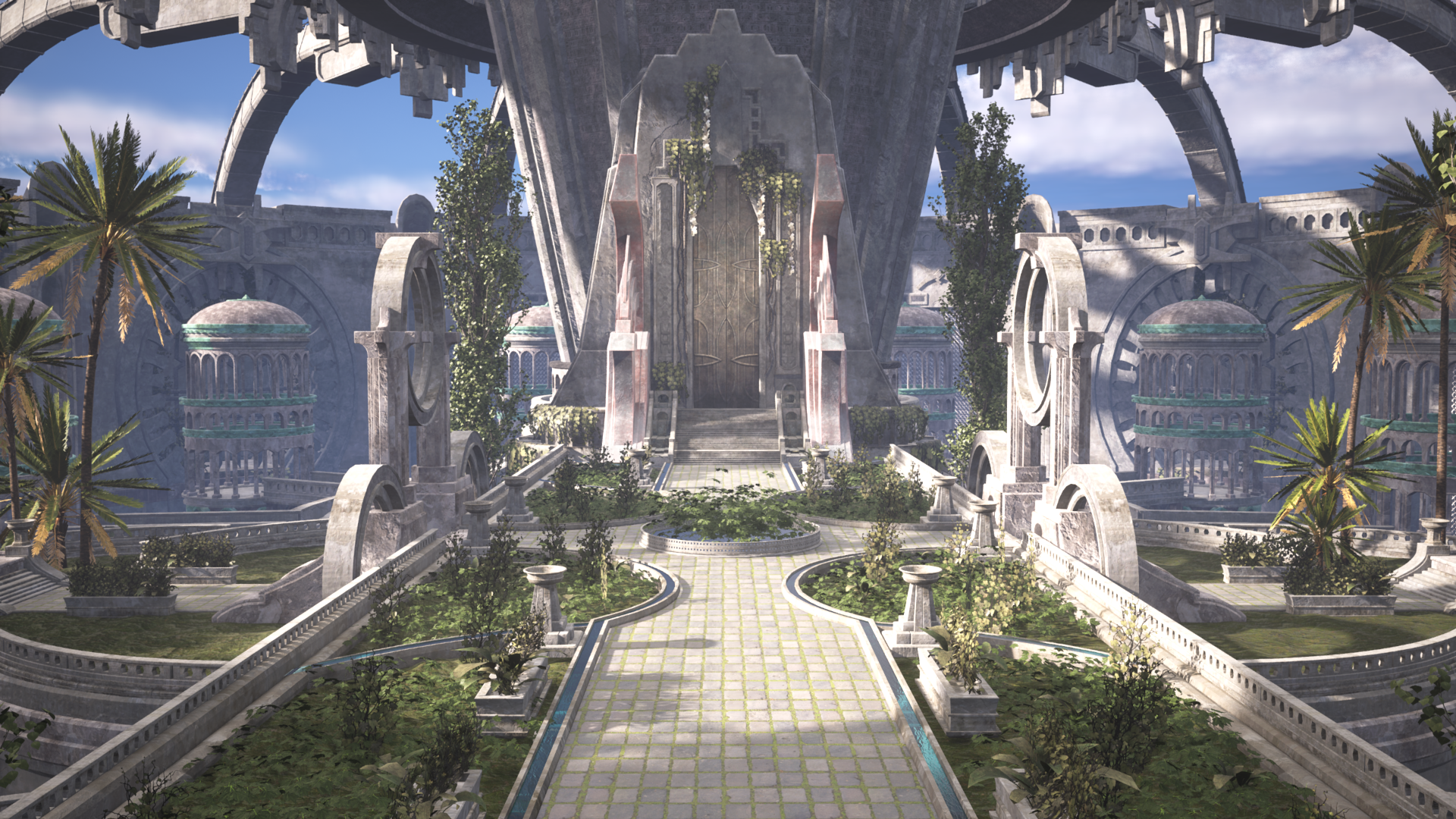

TOWER GARDEN | MODULAR ENVIRONMENT
Technical details
| Technical Field | Information |
| Project | Tower Garden |
| Production | Professional Project |
| Video game | Tenebris Pictura |
| Studio | Pentadimensional Games |
| Rol | Senior Environment Artist |
| Category | Environment Art |
| Software | 3ds Max · ZBrush · Adobe Substance 3D Designer · Adobe Substance 3D Painter · SpeedTree · Unreal Engine 5 |
| Responsibilities | Moodboard & Visual Research · Environment Composition · Modular Environment ·Props Production · Materials Production · Vegetation · Lighting · Unreal Engine Integration |
| Deliverables | Environment · Modular Kits · Props · Materials · Vegetation |
| Pipeline | AAA Production Workflow |
| Rendering | Real-Time |
| Lighting | Lumen |
| Geometry | Nanite |
| Texture Resolution | 2K |
| Duration | ~1 month |


Project Goal
Tower Garden is one of the environments developed for Tenebris Pictura, a video game by Pentadimensional Games.
As a Senior Environment Artist, I was responsible for the complete development of the environment, covering all production phases, from the creation of the Moodboard and visual research to the production of all environment assets, scene composition, lighting, and its final integration into Unreal Engine 5.
The project was developed following a AAA Production Workflow, combining a work methodology centered on modularity, resource reuse, and a production organization oriented toward achieving a solid environment both artistically and technically.
Responsibilities
| Production pipeline |
| Moodboard & Visual Research → Environment Composition → Modular Kits → Props Production → High Poly → Low Poly → UV Layout → Texel Density → Bake → Texturing → Materials Production → Vegetation → Lighting → Unreal Engine Integration → Final Polish |
Workflow
Moodboard & Visual Research → Blockout → Modular Kits → Props Production → High Poly → Low Poly → UV Layout → Bake → Texturing → Materials Production → Environment Assembly → Vegetation → Lighting → Unreal Engine Integration → Final Polish


Environment breakdown
Production
Tower Garden combines architecture, vegetation, and lighting to build an environment coherent with the art direction of Tenebris Pictura. The composition organizes the different elements to guide the player's attention and maintain a clear reading of the environment from any viewpoint.
The environment was developed following a AAA Production Workflow, combining different methodologies depending on the needs of each asset.
The architecture was built through a combination of several Modular Kits and Unique Assets, utilizing the most appropriate solution for each area of the environment. This approach optimized production, facilitated iteration during development, and maintained a balance among resource reuse, constructive flexibility, and visual richness.
All Props were developed following a complete production pipeline, from Blocking to final texturing, including High Poly modeling, optimization via Low Poly, UV Layout development, Texel Density validation, and the Bake process, guaranteeing consistency across all assets before their integration into Unreal Engine 5.
Materials were developed using Adobe Substance 3D Designer and Adobe Substance 3D Painter, combining Tileable Materials, Trim Sheets, and unique materials according to the needs of each element. This strategy allowed maintaining a coherent visual identity, optimizing production, and adapting each surface to the requirements of the environment.
Vegetation was created using trees generated with SpeedTree and vegetation based on Cards, distributed with the Foliage Tool to maintain a balance between visual quality, performance, and flexibility during environment assembly.
The final integration was carried out in Unreal Engine 5, where the complete environment assembly, integration of all assets, material adjustments, lighting configuration via Lumen, and final environment polishing using Nanite were performed.

Wireframe
Wireframes show the geometry organization, the construction of the different modular systems, and the structure of the main assets used during environment production, reflecting both resource reuse and the combination of modular pieces and unique elements.


References
The project began with a Moodboard & Visual Research phase aimed at defining the visual language, architecture, composition, and atmosphere of the environment. These references served as a basis for establishing the art direction and maintaining visual coherence throughout all production phases.


